The Critical Link: How Axles Support Your Suspension
When people think of a smooth ride, they usually picture shock absorbers or springs. However, the axle is the unsung hero that bridges the gap between your engine’s power and the suspension’s ability to keep you stable. Understanding how these components work together is the key to maintaining a safe, reliable vehicle.
The Critical Link: Axle Meets Suspension
While the suspension system manages impacts from the road, the axle serves as the central shaft that connects the wheels to the vehicle. In modern independent suspension systems, the axle (specifically the CV axle or half-shaft) must be flexible enough to move up and down with the suspension while simultaneously rotating to drive the wheels.
Key Roles of the Axle:
Power Transfer: It delivers torque from the transmission to the wheels.
Weight Support: It bears the weight of the vehicle, the passengers, and any cargo.
Structural Integrity: It maintains the position of the wheels relative to each other, ensuring your alignment stays true even when the road gets rough.
Common Issues To Watch For:
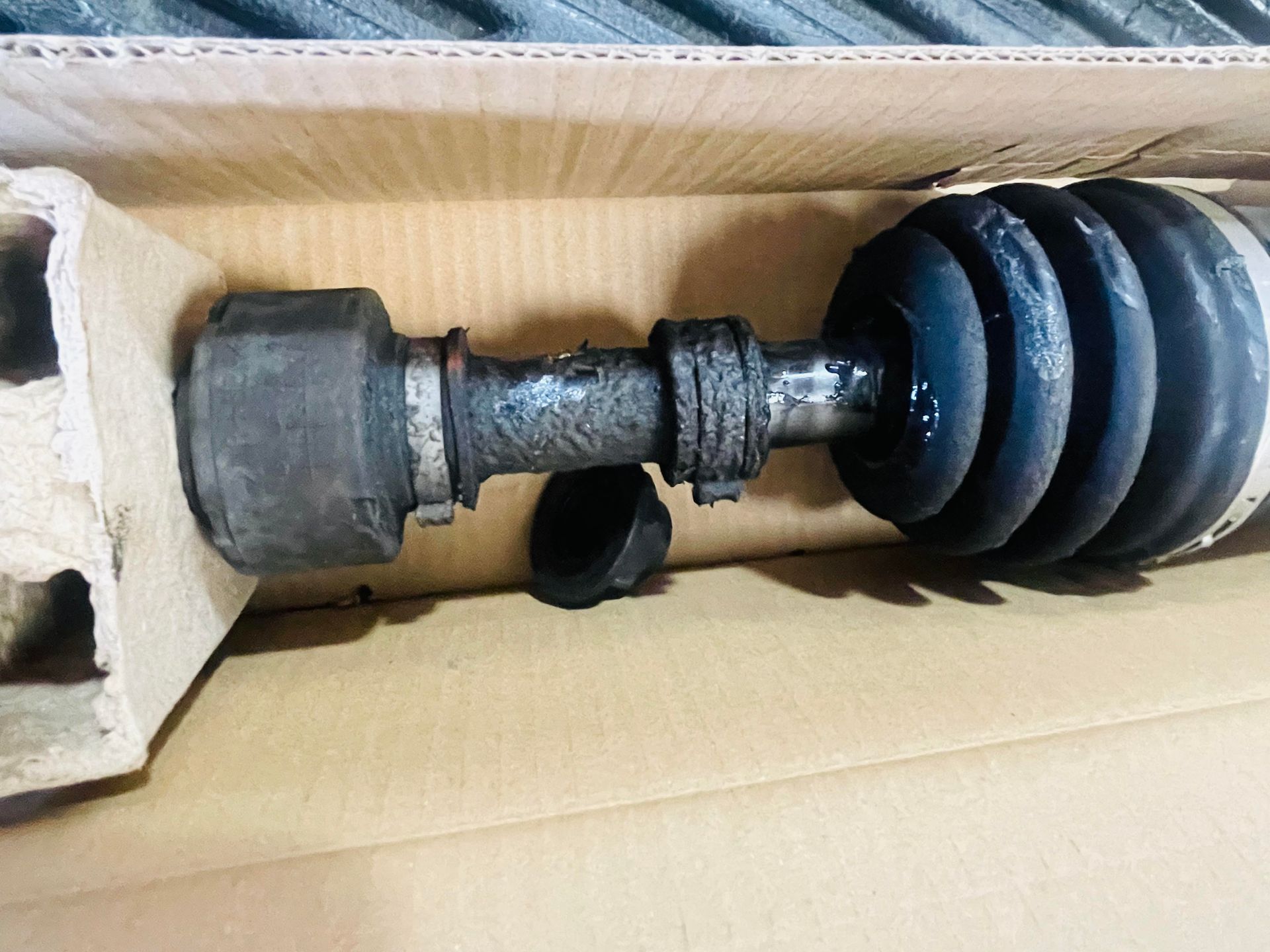
While axles are engineered for durability, they are constantly exposed to immense friction and harsh road conditions. One of the most frequent maintenance hurdles is a torn CV boot. These protective rubber covers eventually crack due to age or impacts from road debris. Once the seal is broken, you will likely notice grease leaking onto the inside of the wheel or the undercarriage, which serves as an early warning sign that the internal components are no longer protected.
If a damaged boot is left unaddressed, it often leads to a worn CV joint. Without proper lubrication, or if dirt and grit enter the assembly, the joint begins to experience metal-on-metal wear. This typically manifests as a distinct clicking or popping noise whenever you make a turn. Because the joint is responsible for transferring power while the wheels are angled, these sounds are a clear indicator that the mechanical integrity of the drivetrain is compromised.
Structural damage can also occur in the form of a bent axle shaft. This usually results from a significant impact, such as striking a deep pothole, hitting a curb, or being involved in a collision. Unlike the rhythmic clicking of a joint, a bent shaft creates persistent vibrations that intensify as your vehicle gains speed. These vibrations aren't just uncomfortable; they put unnecessary stress on your entire drivetrain and suspension system.
Finally, faulty wheel bearings are a common culprit for unusual cabin noise. When heat and friction break down the bearings inside the hub assembly, they produce a characteristic humming or growling sound. You can often distinguish this from tire noise because the pitch or volume will shift in direct relation to your vehicle's speed. Monitoring these symptoms closely can help you catch axle-related issues before they lead to a complete mechanical failure on the road.
Essential Repairs and Maintenance
Catching an axle problem early can save you from a breakdown that leaves you stranded.
- CV Boot Replacement: If you catch a tear early—before the "clicking" starts—you can often just replace the boot and repack it with fresh grease.
- CV Axle Assembly Replacement: Once a joint is damaged and making noise, the most cost-effective and reliable fix is typically replacing the entire half-shaft assembly.
- Hub and Bearing Replacement: If the bearing inside the axle assembly fails, it must be pressed out and replaced (or the entire hub unit replaced) to ensure the wheel spins freely.
- Differential Service: For rear-wheel or all-wheel-drive vehicles, the axle connects to a differential. Changing the fluid here prevents the internal gears from overheating and seizing.