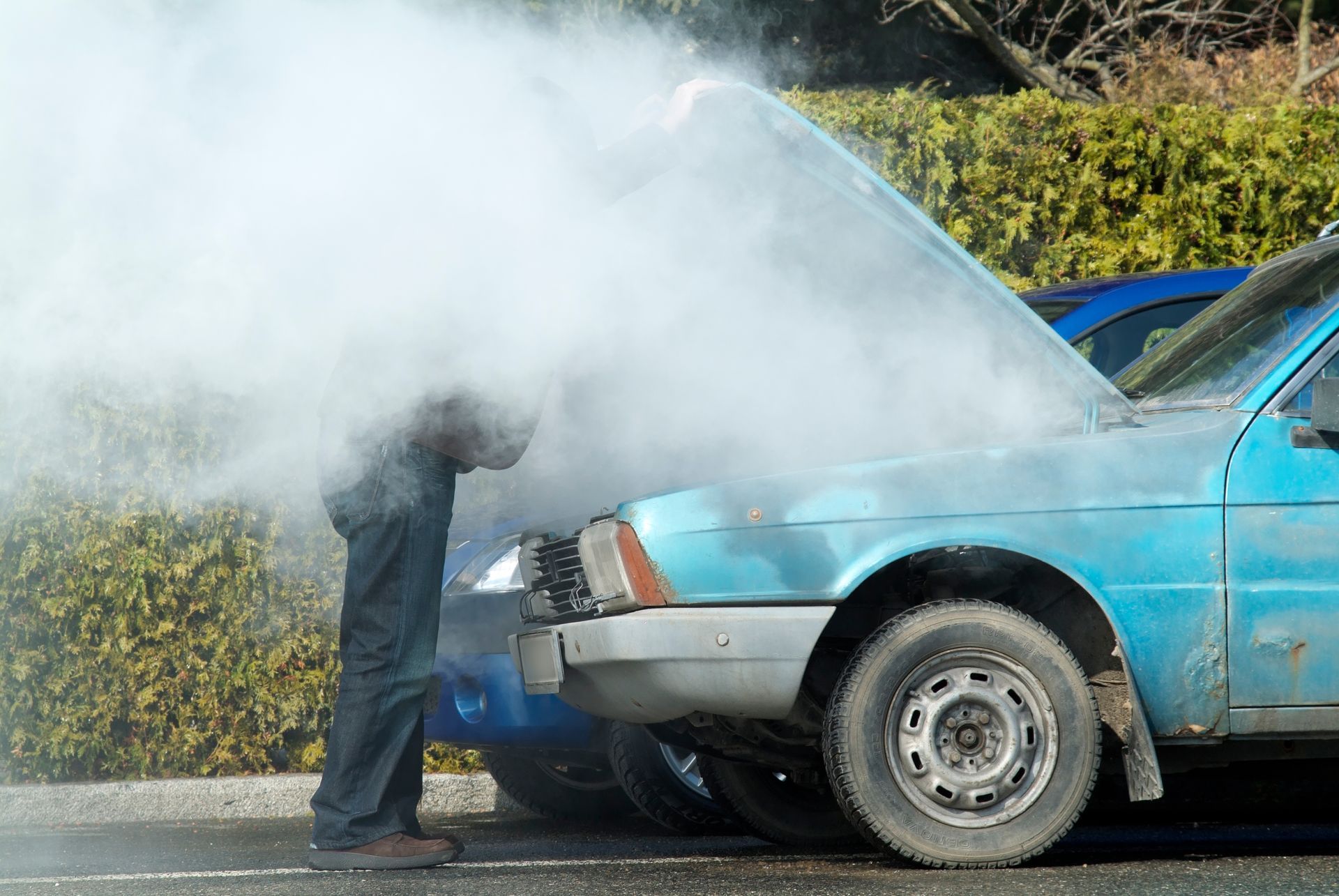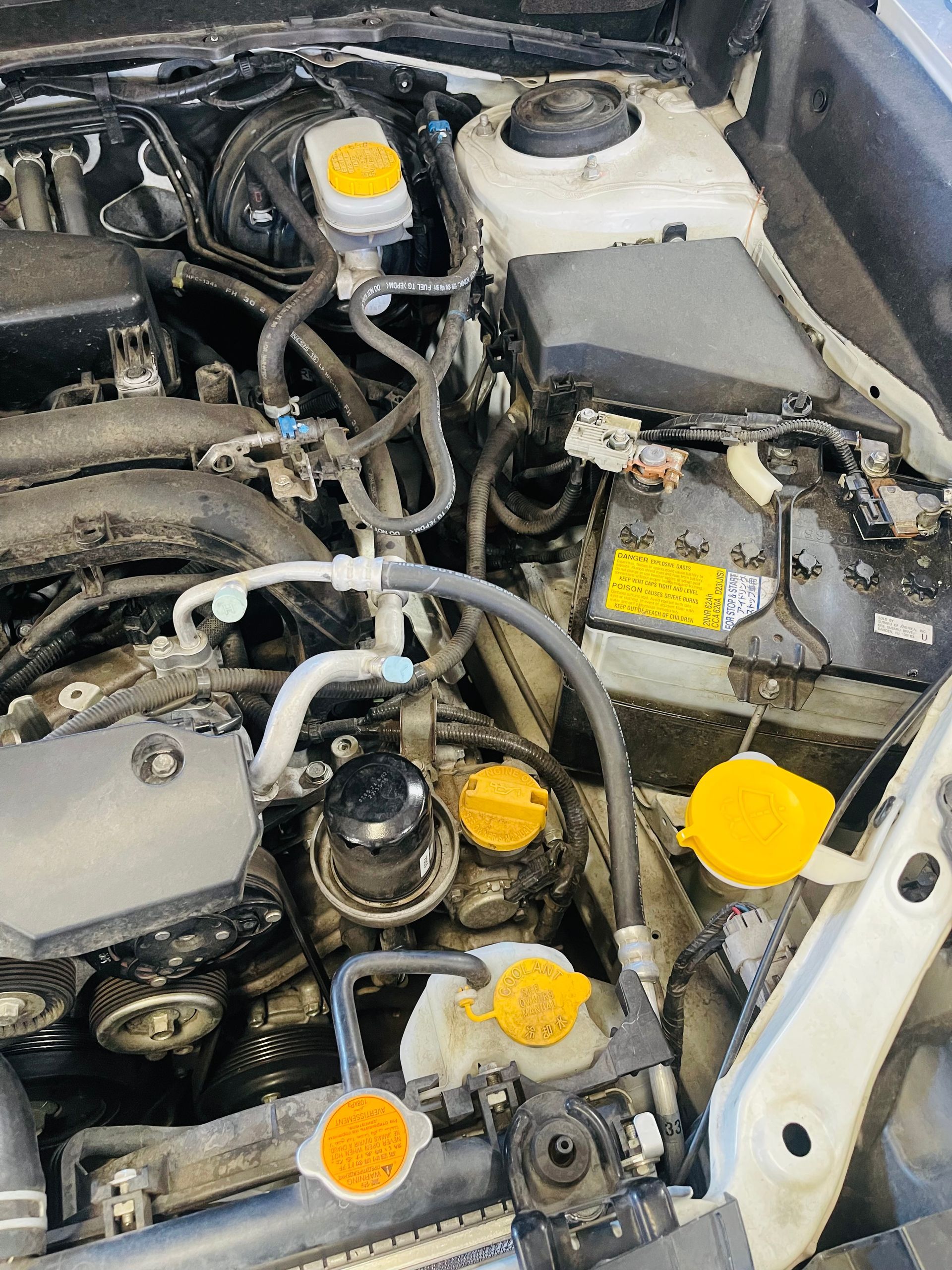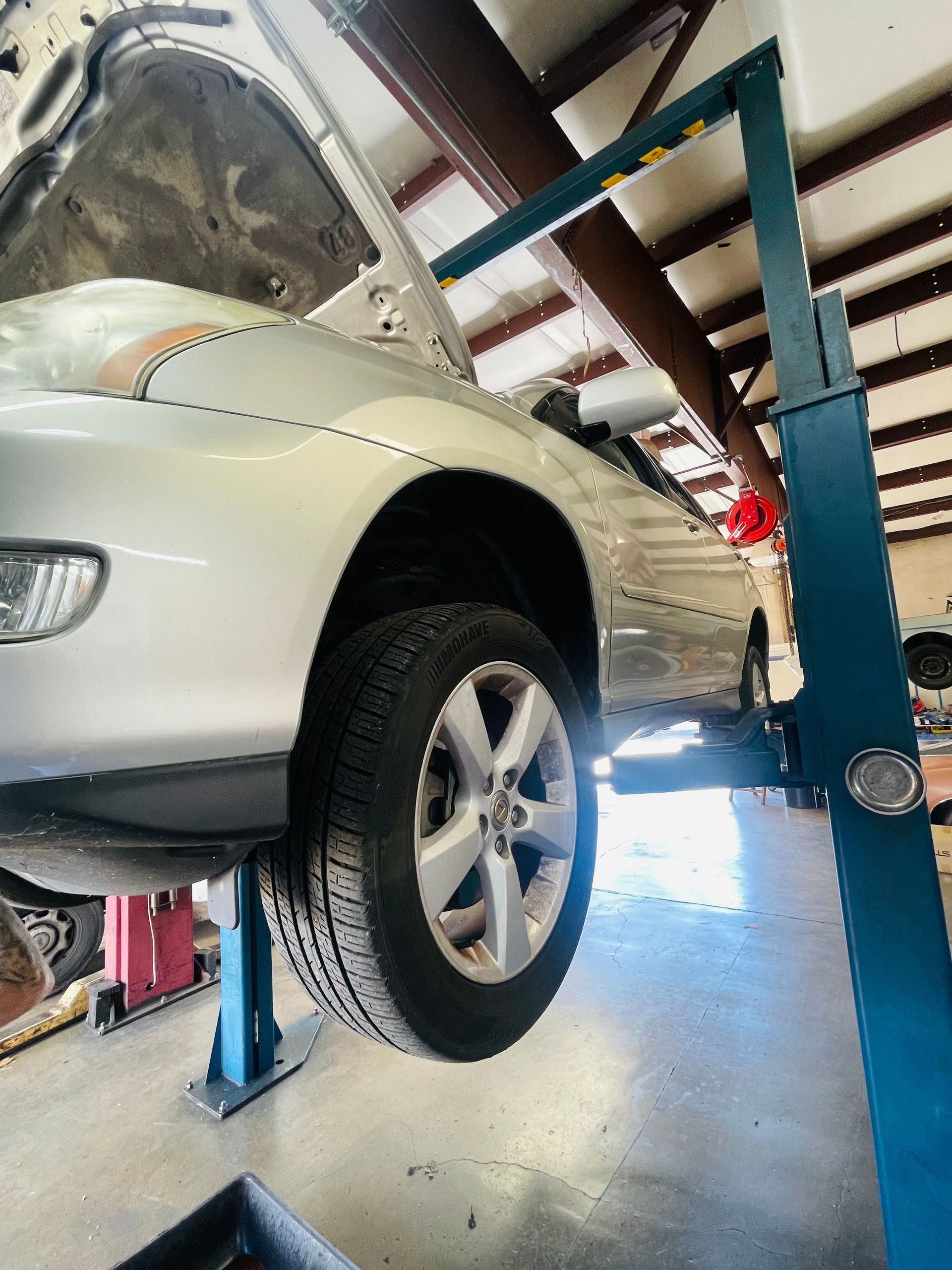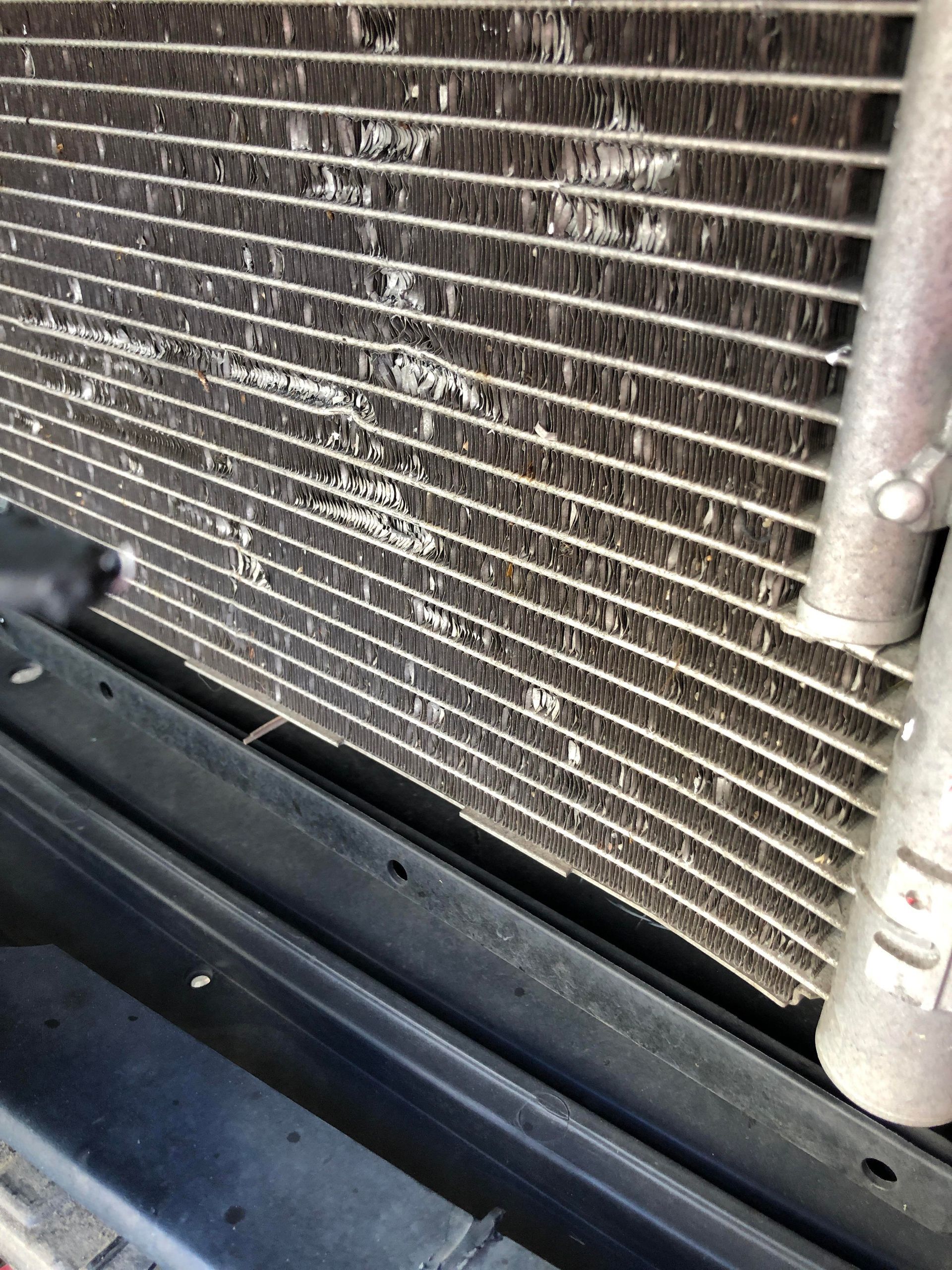
A car that pulls, wanders, wears tires unevenly, or feels unstable may need an alignment, but alignment is not always the complete repair. Worn suspension and steering parts can allow the wheels to move after the alignment angles have been set, causing the same symptoms to return.
The key difference is that an alignment adjusts wheel angles, while suspension service repairs the parts that support and control those wheels. A proper inspection should come first when the vehicle has looseness, noise, bouncing, or uneven ride height.
Signs The Alignment May Be Off
Wheel alignment describes the direction and angle at which the tires sit relative to the road and one another. Potholes, curb impacts, suspension changes, and ordinary wear can move toe, camber, or caster outside the vehicle manufacturer’s specifications.
Common alignment symptoms include:
- The car consistently pulls toward one side.
- The steering wheel sits off-center on a level road.
- The tread has a feathered texture across its surface.
- The vehicle feels nervous or follows grooves in the pavement.
- The tires wear faster along one edge.
Road crown and tire condition can also cause pulling, so one symptom does not confirm an alignment problem by itself. Tire pressure should be checked before testing because one low tire can make the vehicle drift and create misleading steering feedback.
Suspension Wear Usually Creates Movement Or Noise
The suspension includes shocks, struts, springs, control arms, bushings, ball joints, sway bar parts, and mounting components. These parts keep the tires positioned while allowing controlled movement over bumps. As they wear, the wheel may shift during braking, acceleration, or cornering.
Suspension concerns often create clunking, squeaking, repeated bouncing, body lean, or a loose feeling that changes over uneven pavement. A car may also sit lower on one corner if a spring has weakened or broken. Alignment adjustments cannot correct physical movement from a worn joint or damaged bushing.
Bouncing And Body Movement Point Toward Suspension Service
Shocks and struts control the motion of the springs. When they weaken, the car may continue bouncing after a dip, lean farther during turns, or dive heavily when braking. The tires can lose consistent contact with the road, especially over rough pavement.
Weak dampers may also contribute to tire cupping, which creates alternating high and low spots around the tread. An alignment cannot stop that bouncing. The shocks, struts, springs, mounts, and related bushings need to be checked for wear, leakage, damage, and excessive movement.
Uneven Tire Wear Can Come From Either Problem
Tire wear patterns provide useful clues, but several faults can create similar results. Excessive toe often produces feathering, while incorrect camber may wear an inner or outer edge. Worn suspension parts can create those same patterns by allowing the alignment angles to change while the car is moving.
Cupping is more commonly associated with weak shocks, wheel imbalance, tire damage, or loose suspension components. A tire with an internal belt problem can also make the car pull or vibrate even when the alignment measurements are correct. The full tread surface should be examined rather than looking only at the outer shoulder.
Loose Steering Parts Must Be Repaired Before Alignment
Tie rods, ball joints, control arm bushings, and wheel bearings help keep each wheel pointed in the intended direction. If one part has excessive clearance, the alignment reading can change as soon as the car leaves the rack or encounters braking force.
Possible signs of looseness include:
- A clunk when braking or entering a driveway
- Delayed steering response
- A steering wheel that needs frequent correction
- Knocking during low-speed turns
- A humming sound that rises with road speed
- Tire wear that returns soon after an alignment
These symptoms call for hands-on testing. Repeatedly aligning a vehicle with worn parts may improve the steering briefly, but the wheel angles will not stay consistent until the looseness is repaired.
When An Alignment Is Still Needed After Suspension Repair
Replacing control arms, tie rods, struts, springs, ball joints, or other position-sensitive parts can change wheel angles. Even when the new components are installed correctly, the vehicle usually needs an alignment afterward to place the wheels back within specification.
The technician should repair worn components first and perform the alignment last. This order provides accurate measurements and helps protect the tires. It also allows the steering wheel to be centered after the suspension has returned to its proper position.
How Technicians Separate The Two Concerns
Diagnosis begins with tire pressure, tread condition, ride height, and steering feel. The vehicle may then be lifted so the technician can check joints, bushings, bearings, springs, shocks, struts, and mounting points. A road test helps identify pulling, bouncing, vibration, and noises that do not appear while the car is stationary.
If the parts are secure, alignment equipment can measure the wheel angles and compare them with specifications. Regular maintenance helps catch developing wear, but measurements alone cannot reveal every suspension problem. Combining mechanical checks with alignment data prevents adjustments from being used to cover a worn component.
Get Suspension Service And Wheel Alignment In Rancho Cordova, CA, With Asian Imports Garage
If your car pulls, wanders, bounces, clunks, or wears its tires unevenly, Asian Imports Garage in Rancho Cordova, CA, can check the suspension, steering, tires, wheel bearings, and alignment angles.