Brake pads wear a little every time you slow the car down. Because that wear happens gradually, it is easy to drive for months without noticing much difference at the pedal. Then one day the brakes start squealing, stopping feels different, or a technician tells you the pads are much thinner than they were at the last service.
There is no single mileage when every set of brake pads needs replacement. Vehicle weight, traffic, driving style, brake design, and even which axle does more of the work can change pad life considerably. The better approach is to check brake wear regularly and replace the pads based on their actual condition.
How Often Should Brake Pads Be Checked?
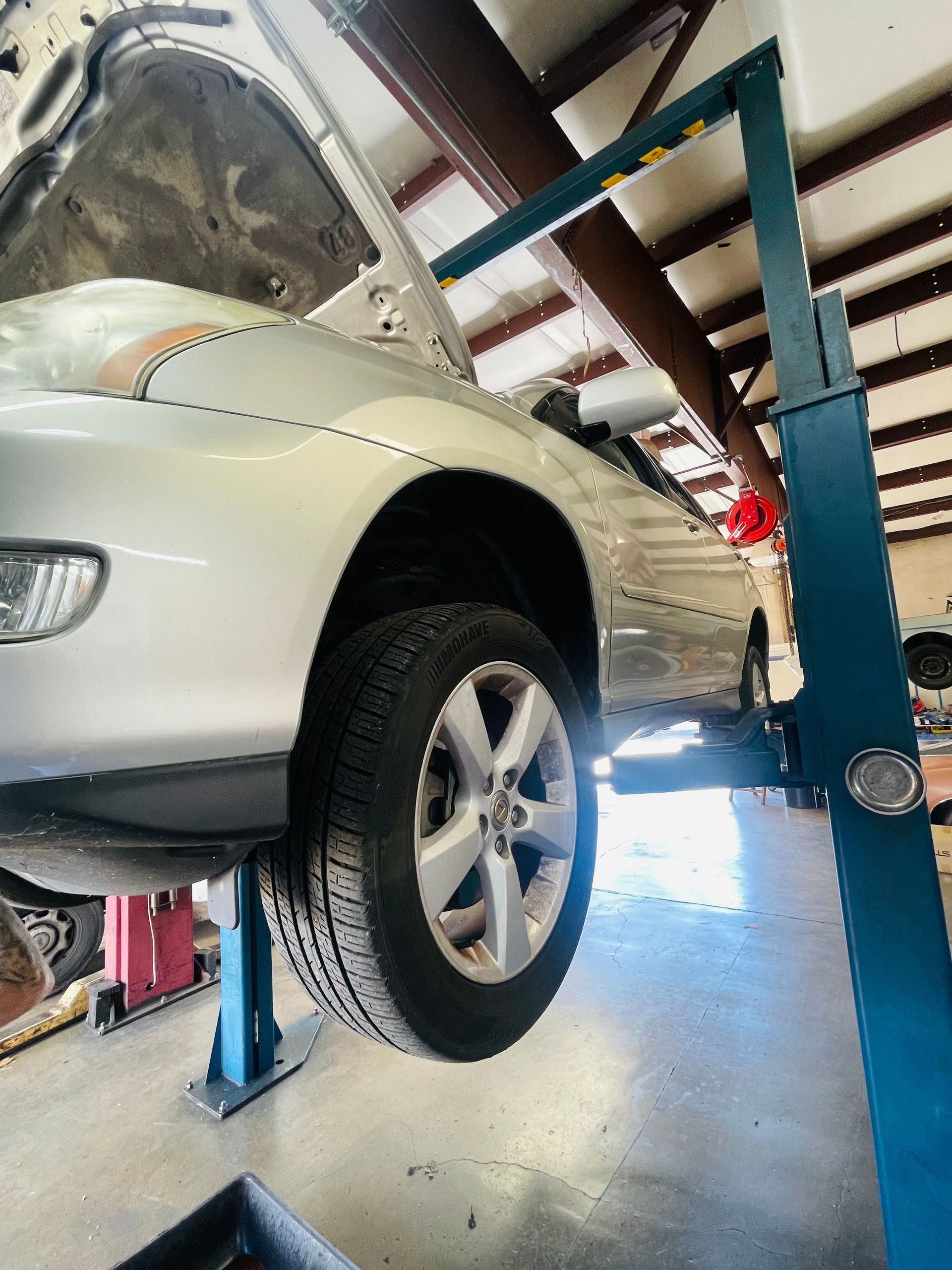
Brake pads are worth checking whenever the wheels are already coming off for tire service or when the vehicle is in for routine maintenance. On many cars, that gives us several opportunities each year to see how quickly the pads are wearing.
At our shop, we measure remaining friction material instead of judging the brakes by mileage alone. If the pads still have plenty of material and are wearing evenly, there is no reason to replace them early. If they are getting close to their service limit, we can tell you before they reach the point where the repair becomes urgent.
Brake Pad Life Can Vary by Tens of Thousands of Miles
Some drivers get a long service life from a set of pads, while others wear through them much sooner. City driving is harder on brakes because every few blocks may bring another stop. Highway driving can be much easier because the brakes may go miles without being used.
Vehicle weight also plays a role. A heavier SUV generally asks more from its brakes than a light compact car. Drivers who brake late and firmly can wear pads faster than those who leave more space and slow down progressively.
Hybrid and electric vehicles can be different again. Regenerative braking uses the electric motor to slow the vehicle during many situations, which can reduce wear on the conventional brake pads.
Thickness Is More Useful Than Mileage Alone
Brake pads begin with a certain amount of friction material, and that material becomes thinner as it is used. During an inspection, we look at how much remains and whether the inner and outer pads are wearing at the same rate.
Uneven wear can tell us something is wrong. A sticking caliper slide, seized caliper, damaged hardware, or brake hose problem can make one pad wear much faster than its partner. Replacing only the worn pads without correcting that problem can ruin the new set quickly.
We also check the rotor surface. Deep scoring, heat damage, excessive rust, or a rotor that has worn below specification can change the repair even when the pads are the original reason the car came in.
Noise Can Warn You That the Pads Are Getting Low
Many brake pads have a small metal wear indicator designed to make noise when the friction material gets thin. It can create a high-pitched squeal while driving or when you apply the brakes.
Some vehicles use electronic brake wear sensors instead. When the pad reaches a certain point, the sensor triggers a dashboard message or warning light.
Neither system should replace regular maintenance checks. Wear indicators can break, sensors may be installed only on certain wheels, and uneven pad wear can leave one pad dangerously thin while another still looks acceptable.
Grinding Means the Brake Service Has Gone Too Far
Squealing can have several causes, but grinding needs faster attention. If a brake pad wears completely through its friction material, the metal backing plate can contact the rotor.
At that point, the brake can still slow the vehicle, but metal-on-metal contact creates heat and quickly damages the rotor. What might have been a straightforward pad replacement can turn into a more expensive repair involving rotors and possibly other overheated components.
A grinding sound, major change in pedal feel, pulling while braking, or brake warning light should be checked promptly rather than waiting for the next scheduled service.
Front and Rear Brake Pads May Not Wear at the Same Rate
Front brakes traditionally handle a large share of the stopping load because vehicle weight shifts forward during braking. That is why front pads often wear sooner on many cars.
Modern brake systems make the picture less predictable. Electronic stability control, brake-force distribution, regenerative braking, and vehicle-specific brake designs can change how much work the rear brakes do. Some cars actually wear their rear pads surprisingly quickly.
We measure both axles instead of assuming the front set always needs replacement first. Knowing the wear at all four wheels also makes it easier to plan future brake service instead of being surprised a few months later.
Replace Pads Based on Condition, Not a Calendar
Brake pads do not expire after a fixed number of years. Their replacement point depends on remaining thickness, wear pattern, rotor condition, and how quickly the pads have been wearing between checks.
If the pads are getting close to their limit, we can estimate whether they are likely to make it comfortably to the next service based on your driving. Someone commuting through heavy traffic every day may need a different plan from a driver who puts relatively few highway miles on the car.
Get Brake Pad Service In Rancho Cordova, CA, With Asian Imports Garage
If you are unsure how much brake pad material is left or your brakes have started squealing, grinding, or feeling different, Asian Imports Garage in Rancho Cordova, CA, can check the pads, rotors, calipers, and brake hardware.